
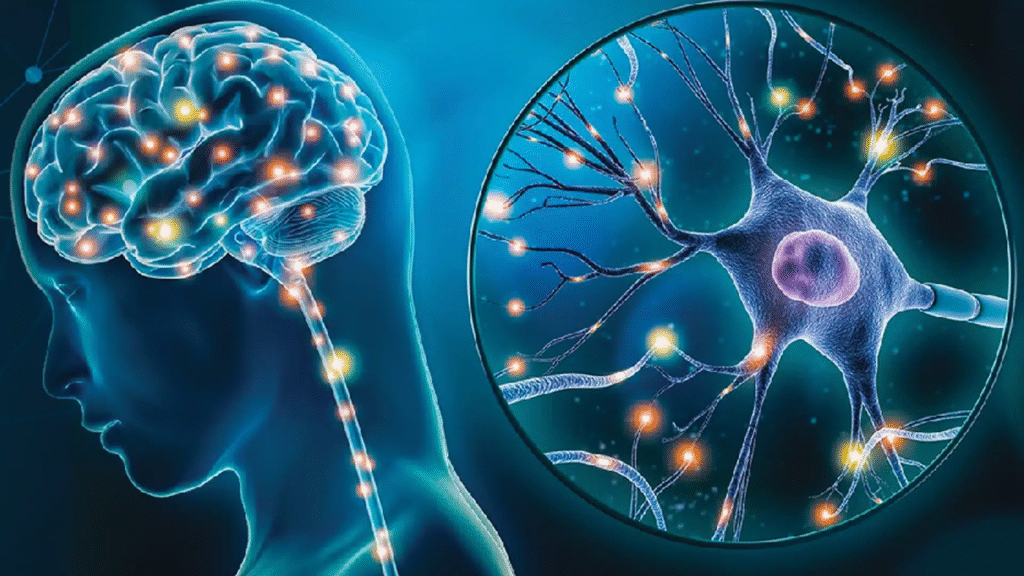
Hyperbaric oxygen therapy (HBOT) involves breathing pure oxygen in a pressurised chamber. Recent research has explored its potential role beyond traditional applications, particularly in supporting brain function through various cellular processes.
Understanding Hyperbaric Oxygen Therapy as a Neuromodulatory Technique
Hyperbaric oxygen therapy as a neuromodulatory technique refers to the way increased oxygen delivery under pressure may influence brain activity and adaptation. Studies suggest that HBOT achieves this by enhancing tissue oxygenation, which can activate certain genes and cellular pathways linked to repair and plasticity (Bin-Alamer et al., 2024).
Mechanisms Supporting Neuroplasticity
Research indicates that HBOT may promote the brain’s ability to reorganise itself, a process known as neuroplasticity. This appears relevant in conditions involving brain injury or persistent symptoms. Clinical observations from controlled studies show changes in brain imaging and functional improvements after structured HBOT protocols, with effects sometimes lasting months after treatment completion (Bin-Alamer et al., 2024).
Mitochondrial and Cellular Effects
One area of interest centres on mitochondrial function. Preclinical models demonstrate that HBOT can influence energy production within cells and reduce certain markers of cellular stress. Additional findings point to improved mitochondrial integrity and possible transfer of healthy mitochondria between brain cells under hyperbaric conditions (Bin-Alamer et al., 2024).
Neurogenesis, Angiogenesis and Synaptic Changes
Investigations also highlight effects on new neuron formation and blood vessel growth in the brain. Markers associated with stem cell activity and vascular signalling pathways appear upregulated following HBOT exposure. Similarly, proteins involved in synapse formation and axonal growth show increased expression in animal models, suggesting support for structural brain repair (Bin-Alamer et al., 2024).
Inflammatory and Neurotrophic Pathways
Further research examines anti-inflammatory responses and the modulation of brain-derived neurotrophic factor (BDNF). These pathways play roles in neuronal survival and synaptic plasticity. Emerging evidence also notes telomere lengthening and reduced systemic inflammation markers in human participants after repeated HBOT sessions (Bin-Alamer et al., 2024).
Conclusion
The review by Bin-Alamer et al. (2024) summarises a range of preclinical and clinical findings related to hyperbaric oxygen therapy as a neuromodulatory technique. While mechanisms such as enhanced mitochondrial function, neurogenesis, and reduced inflammation are proposed, ongoing research continues to explore these effects across different neurological and psychiatric conditions.
References
Bin-Alamer O, Abou-Al-Shaar H, Efrati S, Hadanny A, Beckman RL, Elamir M, Sussman E, Maroon JC. Hyperbaric oxygen therapy as a neuromodulatory technique: a review of the recent evidence. Front Neurol. 2024 Oct 9;15:1450134. doi: 10.3389/fneur.2024.1450134. PMID: 39445195; PMCID: PMC11496187. https://doi.org/10.3389/fneur.2024.1450134
Slater, Gordon. (2024). Current Review: Hyperbaric Oxygen Analysis with Appropriate Cognitive Assessment. Journal of Clinical Medical Research. 1-5. 10.46889/JCMR.2024.5315. https://www.researchgate.net/publication/387118078_Current_Review_Hyperbaric_Oxygen_Analysis_with_Appropriate_Cognitive_Assessment
Disclaimer: This blog is for informational purposes only and should not be considered medical advice. Please consult with your healthcare provider for any questions or concerns regarding your health.