
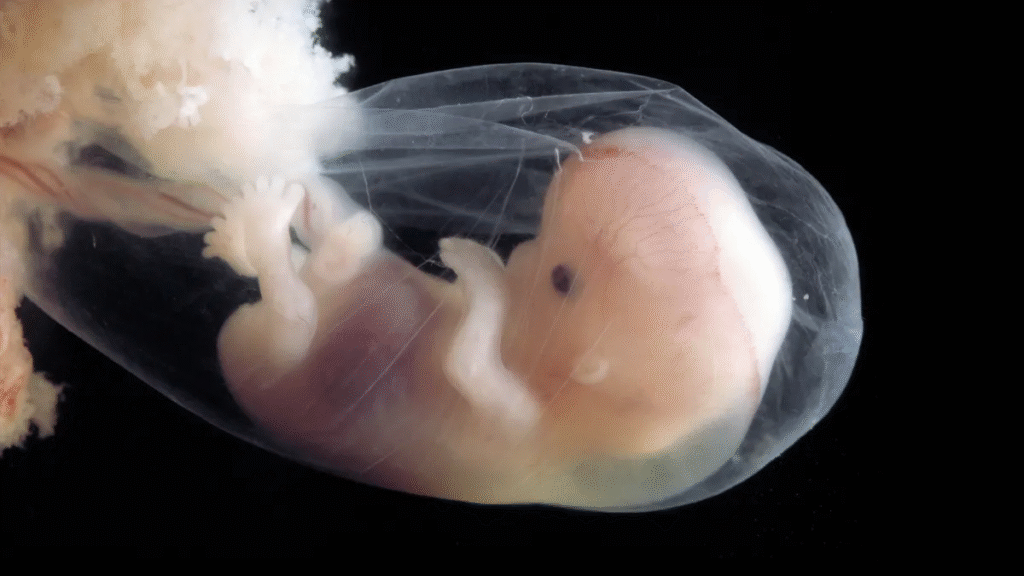
One of the more remarkable observations in regenerative medicine is that unborn babies can heal injuries without leaving a scar. This phenomenon, known as foetal wound healing, has drawn considerable research interest — not least because of what it might reveal about healing more generally. This article gives a general, educational overview of the topic.
What Is Foetal Wound Healing?
Foetal wound healing refers to the way skin injuries in the developing foetus can heal without forming a scar, in contrast to the scarring that typically follows injury in adults (Yin et al., 2020). This scar-free repair has been recognised for several decades and remains an active area of scientific study.
Why the Foetus Heals Differently
Healing after a skin injury generally involves several overlapping stages, including an inflammatory response, a proliferation phase and a remodelling phase (Yin et al., 2020). In the foetus, these stages are described as unfolding differently — for example, with a reduced inflammatory response — which is thought to be part of why scarring does not occur. Researchers continue to investigate exactly which factors are responsible.
The Transition to Scarring
Interestingly, the ability to heal without scars is not present throughout the whole of development. The literature describes a transition, later in foetal development, from scar-free healing to the scar-forming healing seen after birth (Yin et al., 2020). Understanding what changes at this transition is one of the questions that makes this area so intriguing.
What It Might Mean for Adults
The obvious question is whether the mechanisms behind foetal healing could one day inform how adult wounds are approached. This is precisely the kind of question regenerative medicine explores — whether the body’s own early-life healing processes might be better understood and, in time, drawn upon (Slater, 2019). It is important to emphasise that this remains an area of research rather than established treatment, and outcomes are not established.
Conclusion
Foetal wound healing is a striking example of the body’s capacity for scar-free repair, and it continues to intrigue researchers interested in healing and regeneration. This overview is general in nature; for questions about your own health, please speak with a qualified healthcare provider.
References
- Slater, G. L. (2019). Foetal healing cascade — Can we duplicate it in adults? Journal of Regenerative Biology and Medicine. https://www.researchgate.net/publication/336074516_Foetal_Healing_Cascade_-_Can_We_Duplicate_It_In_Adults
- Yin, J.-L., Wu, Y., Yuan, Z.-W., Gao, X.-H., & Chen, H.-D. (2020). Advances in scarless foetal wound healing and prospects for scar reduction in adults. Cell Proliferation, 53(11), e12916. DOI: 10.1111/cpr.12916
Disclaimer: This blog is for informational purposes only and should not be considered medical advice. Please consult with your healthcare provider for any questions or concerns regarding your health.