
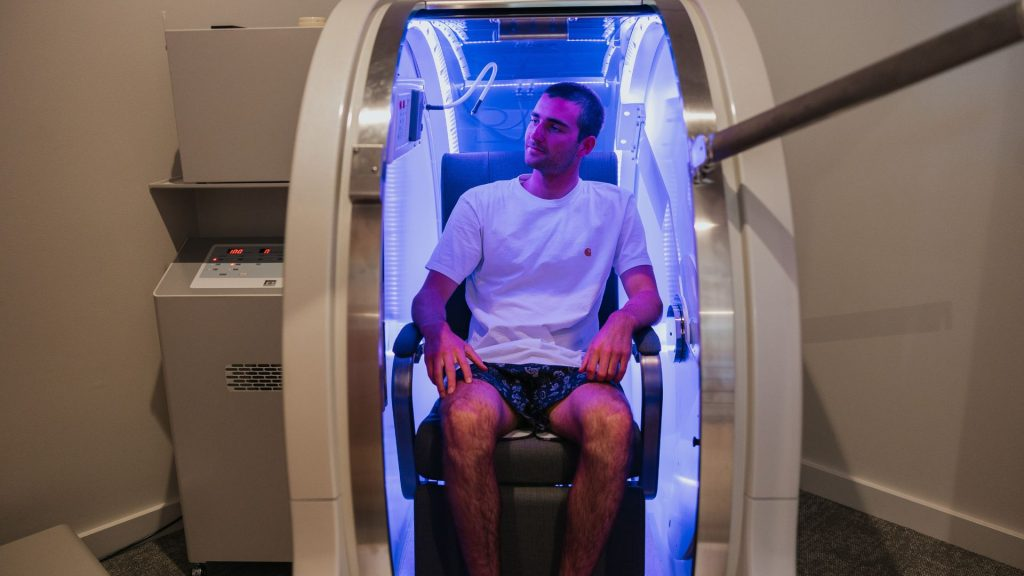
The use of Hyperbaric Oxygen Therapy (HBOT) for recovery has become an increasingly popular area of interest among active people looking to bounce back more comfortably after training. HBOT involves breathing pure oxygen in a pressurised chamber, temporarily increasing the oxygen carried in the blood and delivered to working muscles and tissues.
The idea behind HBOT for recovery
Exercise creates small amounts of tissue stress and microscopic muscle damage, which the body then repairs. Because repair processes rely on oxygen, the premise of HBOT for recovery is that briefly increasing oxygen availability may support the tissues as they rebuild after demanding activity (Slater et al., 2022).
Oxygen delivery and tissue repair
When oxygen dissolves into the plasma under pressure, it can reach tissues more readily than usual. The same oxygen-dependent processes that assist wound healing — fibroblast activity, collagen synthesis and the formation of new blood vessels — are also relevant to musculoskeletal repair, which is why HBOT for recovery is often discussed alongside sports rehabilitation.
Inflammation and perceived fatigue
Some research suggests that hyperbaric oxygenation can influence markers of oxidative stress and inflammation (De Wolde et al., 2021). Managing the inflammatory response after heavy exercise is one of the ways the body prepares for the next session, and this is part of why HBOT for recovery is explored as a way to support comfort, reduce perceived fatigue and improve readiness between training sessions, especially during periods of intense competition or high training volume.
Using HBOT for recovery sensibly
Using HBOT for recovery is not a shortcut around good training, sleep and nutrition, and evidence in healthy athletes is still developing. Claims that it improves athletic performance are not established, and it should not be presented as a treatment. Sessions should take place in accredited facilities with proper supervision, and anyone with a medical condition should seek professional advice before starting.
Conclusion
HBOT for recovery is an emerging wellness application of hyperbaric oxygen therapy that aims to support the body’s natural repair processes after exercise. It is best viewed as a complement to sound recovery habits, explored under professional guidance in an accredited setting.
Reference List
- De Wolde, S. D., Hulskes, R. H., Weenink, R. P., Hollmann, M. W., & Van Hulst, R. A. (2021). The effects of hyperbaric oxygenation on oxidative stress, inflammation and angiogenesis. Biomolecules, 11(8), 1210. DOI: https://doi.org/10.3390/biom11081210
- Slater, G., O’Malley, M., Slater, T., & Sambo, T. (2022). Hyperbaric oxygen therapy: An overview. Journal of Regenerative Biology and Medicine. Retrieved from: https://www.researchgate.net/publication/360995927_Hyperbaric_Oxygen_Therapy_An_Overview
Disclaimer: This blog is for informational purposes only and should not be considered medical advice. Please consult with your healthcare provider for any questions or concerns regarding your health.